Spatial Orientation
Measures how quickly you convert instrument references into a correct mental position in space.
Why recruiters care about it
This module reveals whether a candidate can convert 2D instrument information into 3D directional sense.
Inside Compass, it is critical for showing whether you can read RMI/ND-like logic early and clearly.
Step-by-step simulation flow
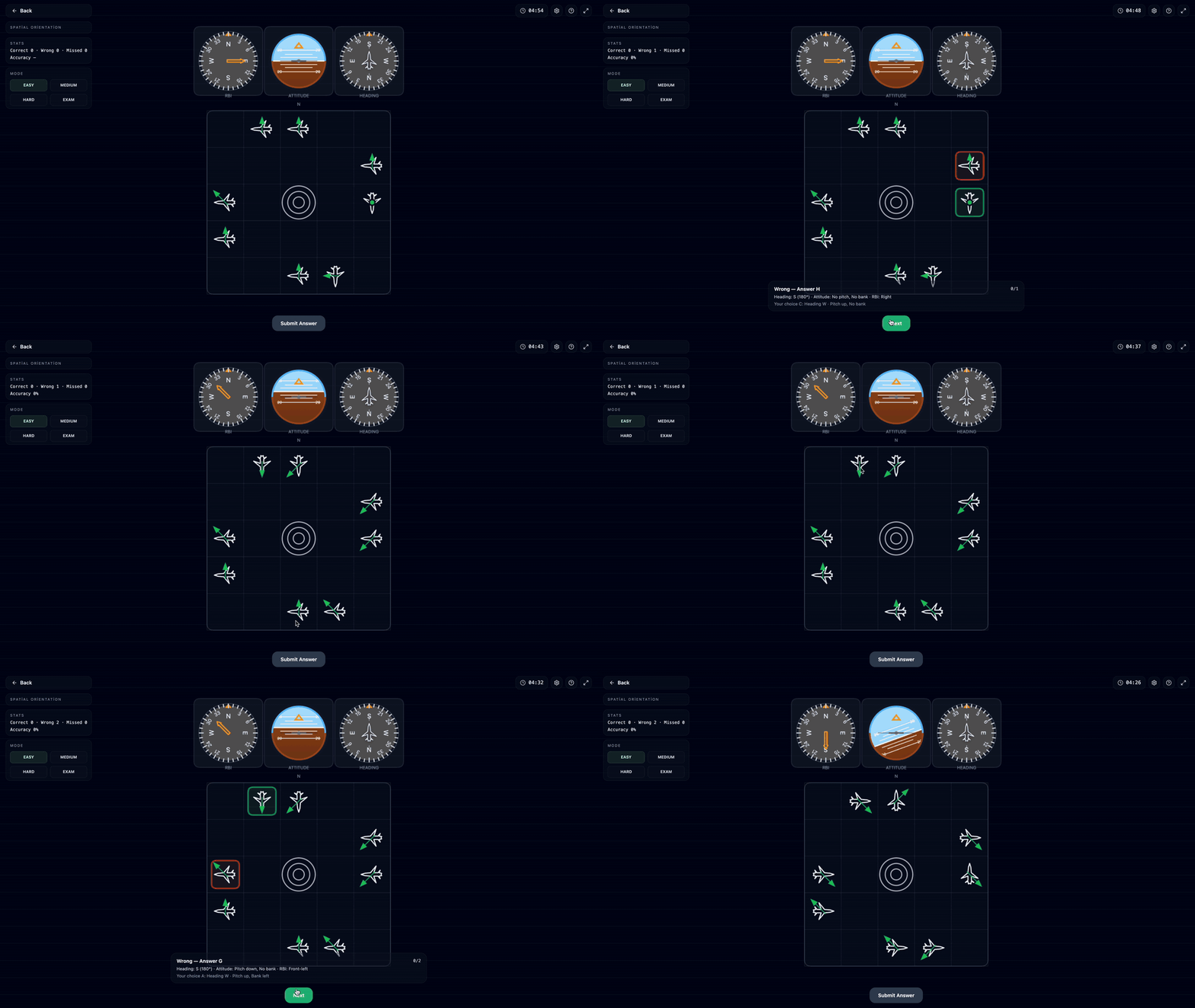
Read the three instruments
Each question shows three instruments: RBI (the beacon's bearing relative to the aircraft nose), ATTITUDE (pitch and bank) and HEADING (the aircraft heading). Together they describe the reference aircraft you are looking for.
Pick the right aircraft of eight
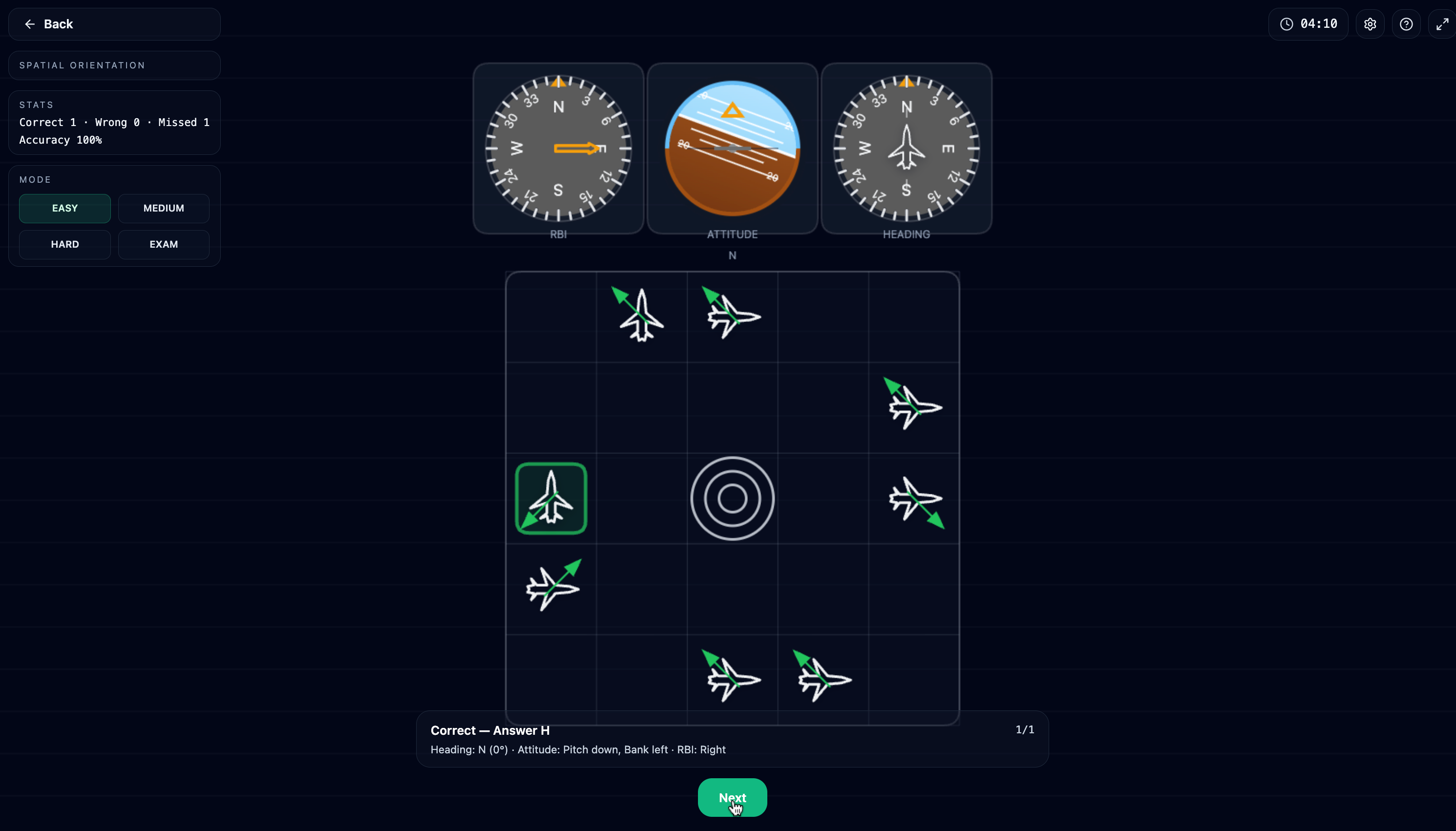
A beacon sits at the centre of the grid with eight aircraft silhouettes around it. The task is to find the single aircraft whose heading, pitch/bank attitude AND position relative to the beacon all match the instruments, click it, and lock it in with Submit.
Get instant feedback
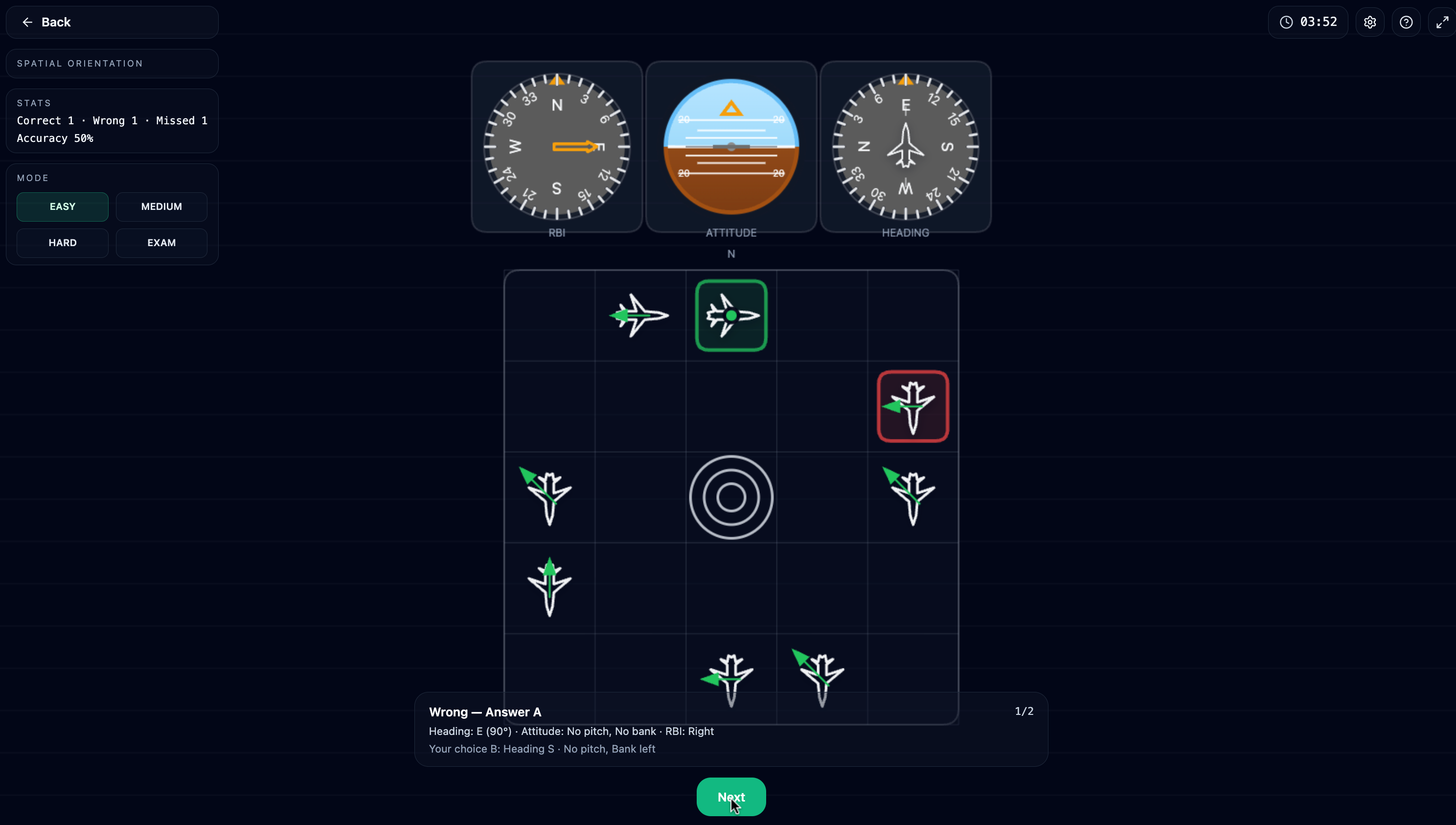
On submit the correct aircraft is framed green; a wrong pick is shown in red, and the strip below spells out the full answer (Heading · Attitude · RBI). Next loads a fresh question.
Timing and scoring
Each question is timed: 30 seconds on Warm-up, 20 on Standard, 15 on Advanced; expiry counts the question as missed and a new one appears. The score is your accuracy over answered questions; the session runs 5 minutes.
How difficulty scales
Difficulty controls how similar the distractors are: on Warm-up only 2 of the eight aircraft share the correct heading; on Advanced 6–7 share it, so the discrimination rests entirely on pitch, bank and RBI — with the question timer cut in half.
High scores come from a fixed elimination order: cut the crowd with Heading first, then check Bank direction, verify position with RBI, and separate the final pair with Pitch.