Slalom
Measures fast correction, early error detection, and path control without oversteering.
Why recruiters care about it
Slalom shows how cleanly you make fine motor decisions at high speed.
Within Compass, it is one of the clearest modules for exposing how balanced your reactive control really is.
Step-by-step simulation flow
Fly through the gates
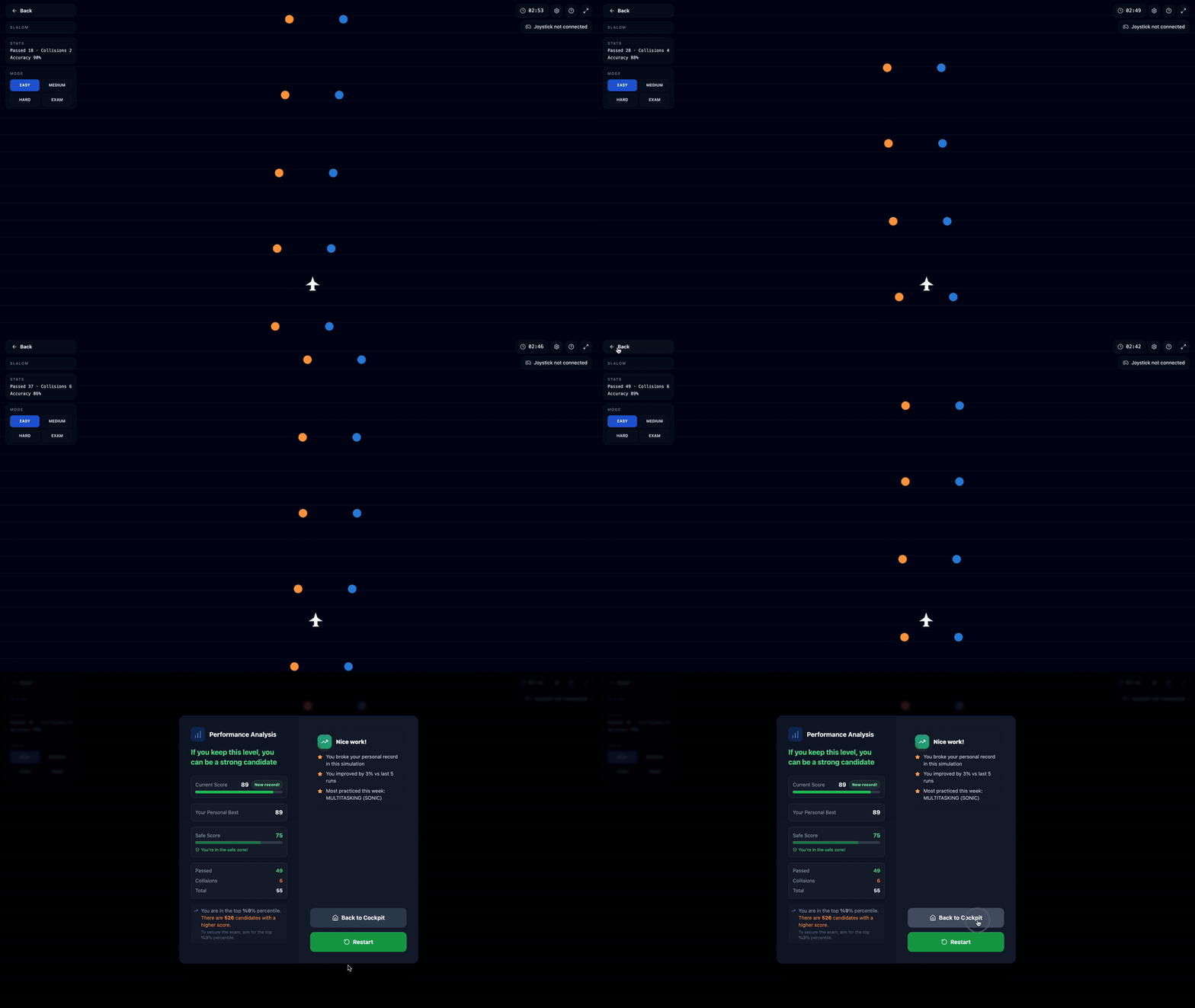
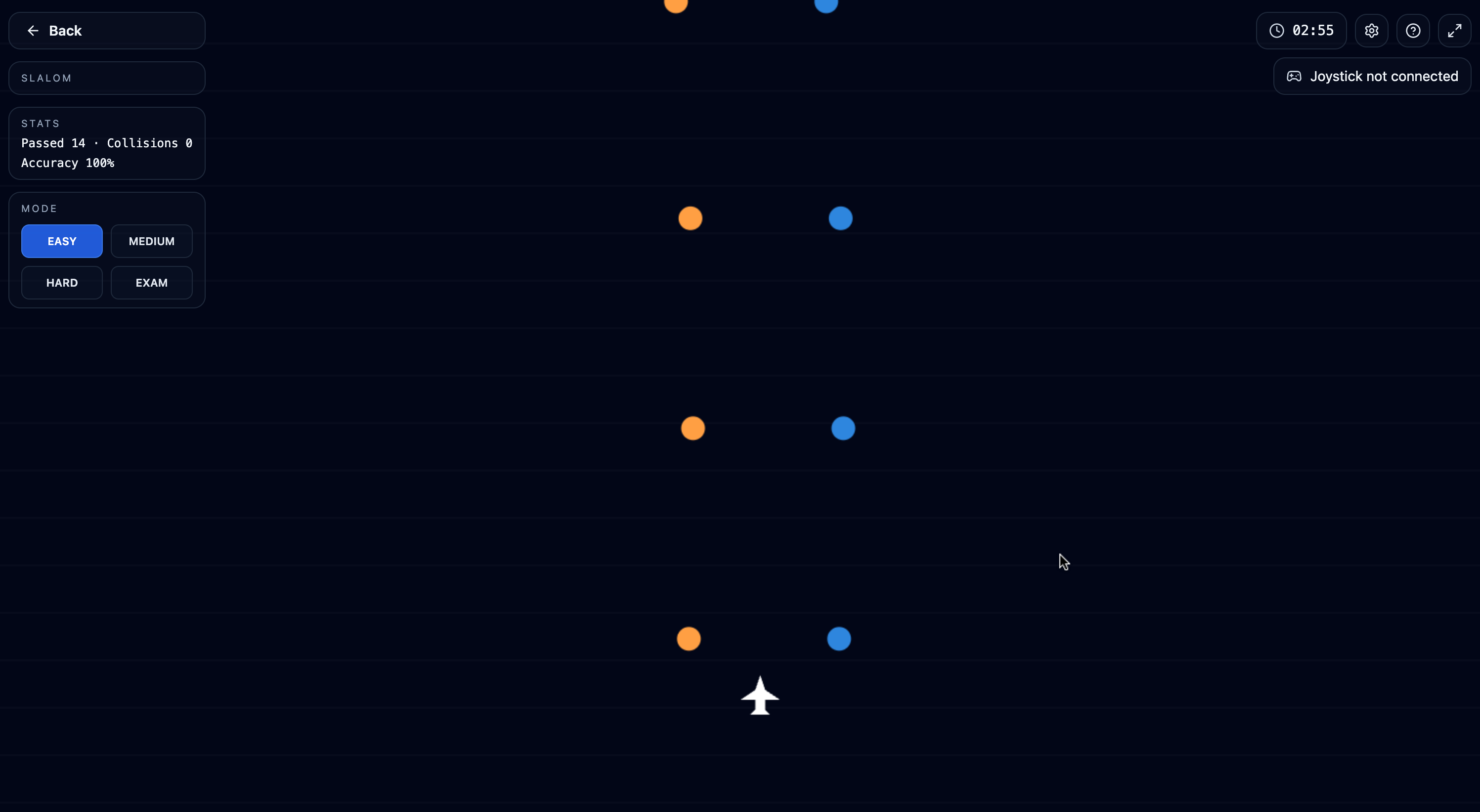
Your plane is fixed near the bottom of the screen; pairs of orange (left) and blue (right) dots — gates — scroll down from the top. You slide the plane horizontally with ← / → or a joystick and pass between the two dots of every gate.
Counter the wind
An invisible wind constantly pushes the plane sideways, changing direction at intervals. Even with no input the plane will not stay put — catching the drift early and countering it with small corrections is the core of the task.
Collisions and misses
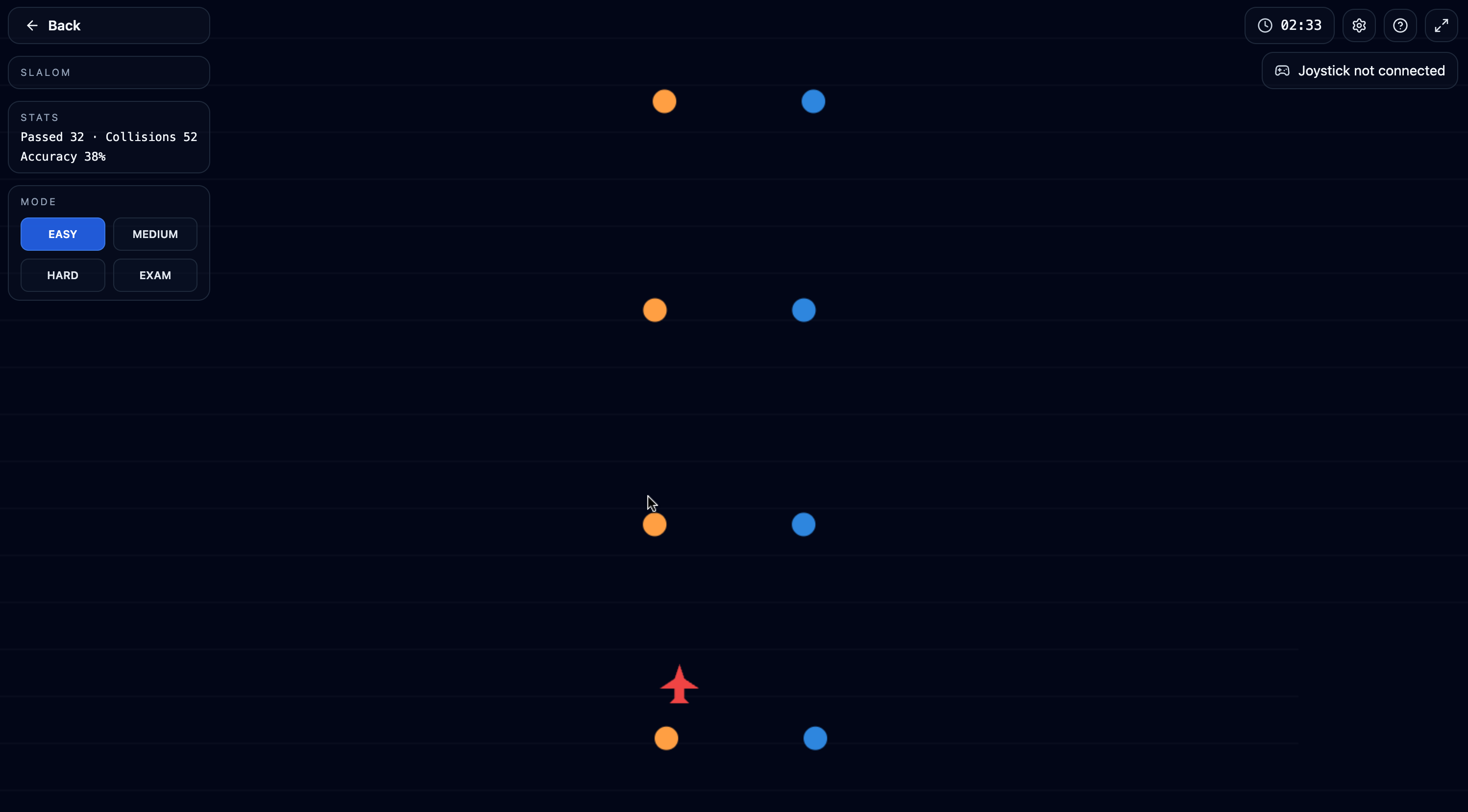
Hitting a dot, or being outside the gap when the gate reaches your line, counts as a fail and flashes the screen red. The run continues — you reset your focus on the next gate.
Scoring
The score is the share of gates passed out of all gates encountered (0–100). A regular run lasts 3 minutes; Mock Exam runs 5 minutes, ramping Warm-up → Standard → Advanced in 100-second blocks.
How difficulty scales
As difficulty rises the gates fall faster and the wind grows markedly stronger (the Advanced wind is four times the Warm-up wind). With the tempo, catching drift early becomes ever more valuable.
Average candidates notice the drift late and zig-zag with hard corrections; strong candidates move to the middle of the gap early and hold it there with micro-corrections.