Basic Coordination
This is the start module for Compass; hand-eye coordination, directional control, and basic motor rhythm are read here.
Why recruiters care about it
Basic Coordination shows how quickly a candidate adapts to joystick or directional control.
It often acts as the entry layer that measures baseline stability before heavier tasks begin.
Step-by-step simulation flow
Two instruments, two hands
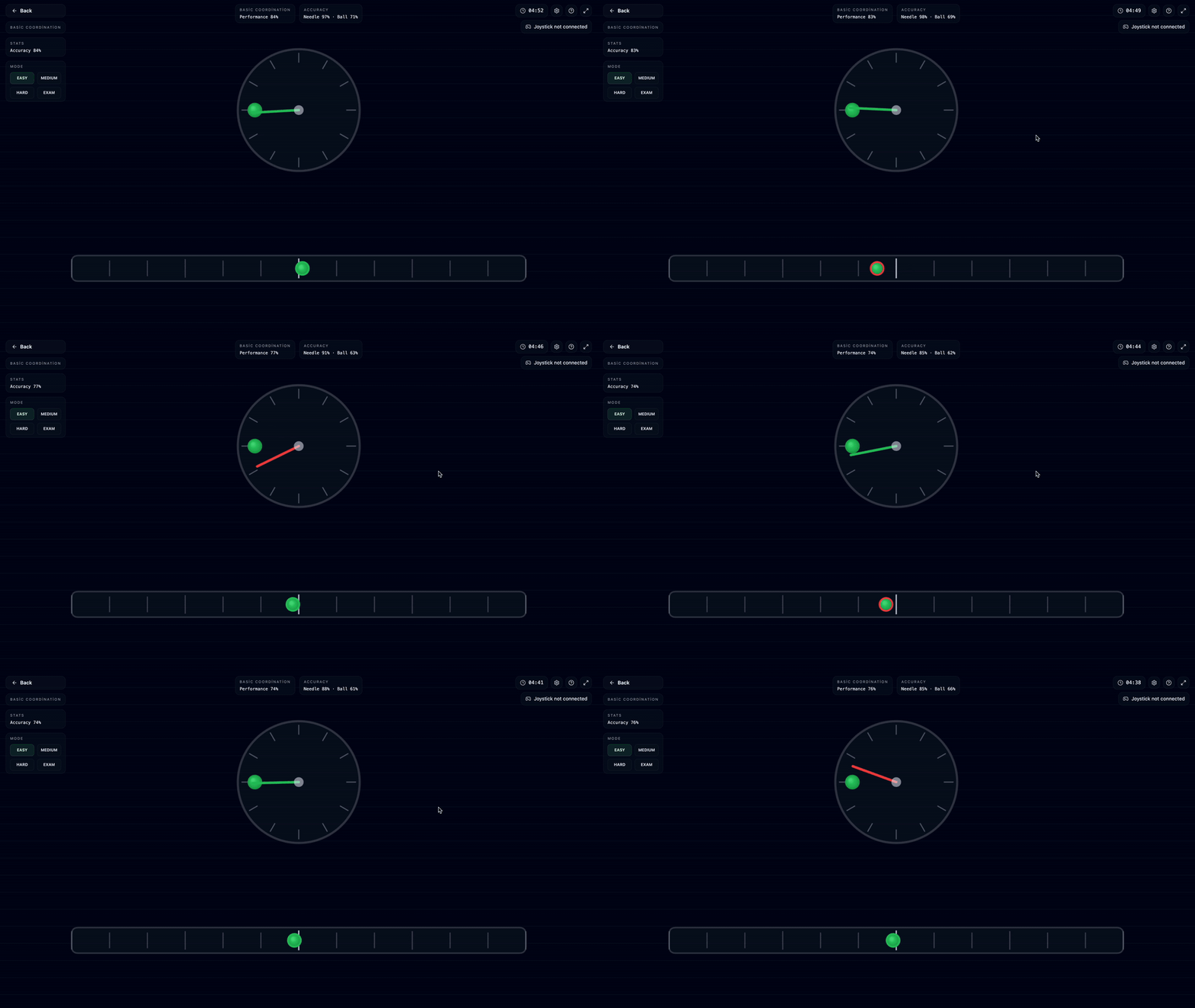
On top sits a round dial with a fixed green target ball and a drifting needle. Below runs a horizontal rail with a sliding ball and a bright centre line. Both tasks run continuously, at the same time.
Hold the needle on the target
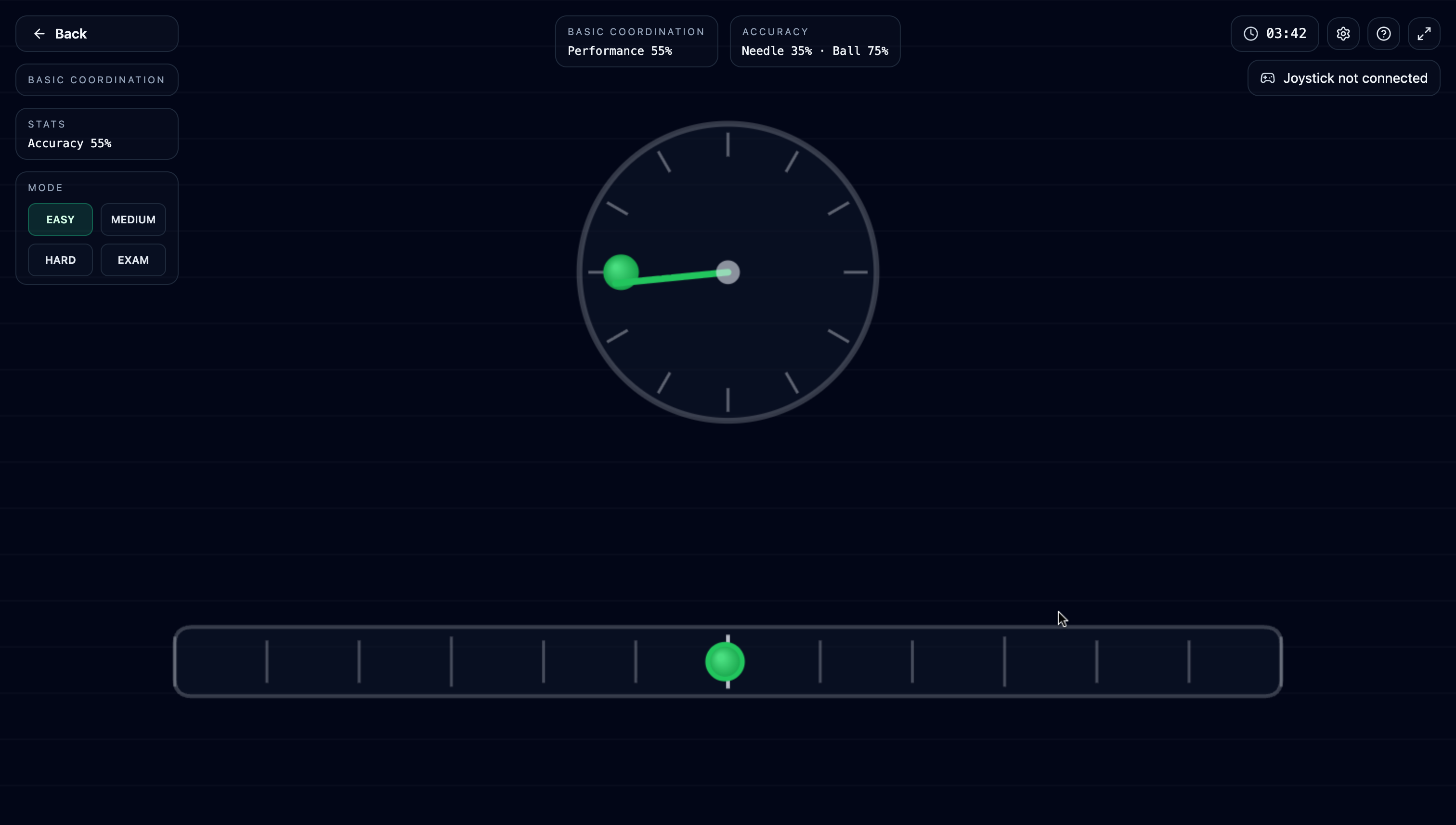
The needle drifts on its own; you rotate it with ↑ / ↓ (or the joystick Y axis) and keep its tip on the fixed green ball. The needle renders green while aligned and red when it slips off.
Keep the ball centred
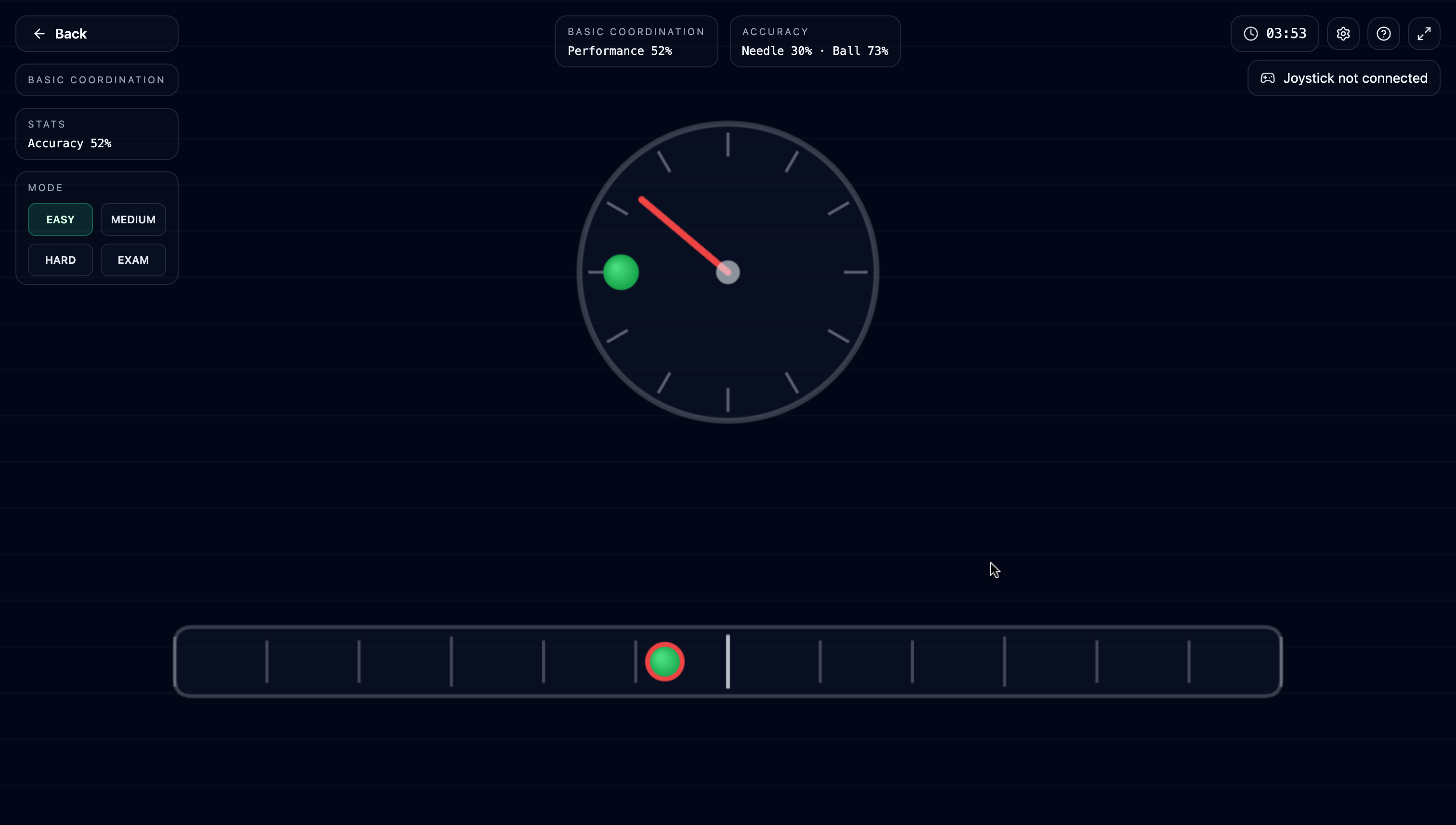
The rail ball drifts randomly; you push it back with S / D (or the joystick X axis). Its ring turns green while any part of the ball overlaps the centre line.
Scoring
Time-in-tolerance is tracked separately for both tasks and converted to percentages; the score is their average. A regular run lasts 5 minutes; Mock Exam hardens in 100-second blocks.
How difficulty scales
Higher difficulty makes the drifts both stronger and more frequent while also reducing your control authority: on Advanced you answer a stronger disturbance with a slower hand.
The deciding skill is scanning both tasks in one rhythm: needle – ball – needle – ball. Locking onto one instrument bleeds the other's time, and since the score is an average, both sides are worth exactly the same.