Physics
An English physics support module for Compass candidates, built to sharpen technical reasoning and cause-effect reading.
Why recruiters care about it
This support module shows how cleanly you can read technical logic under time pressure.
It is not presented as an official Compass task; the aim is to support your technical-reasoning layer.
Step-by-step simulation flow
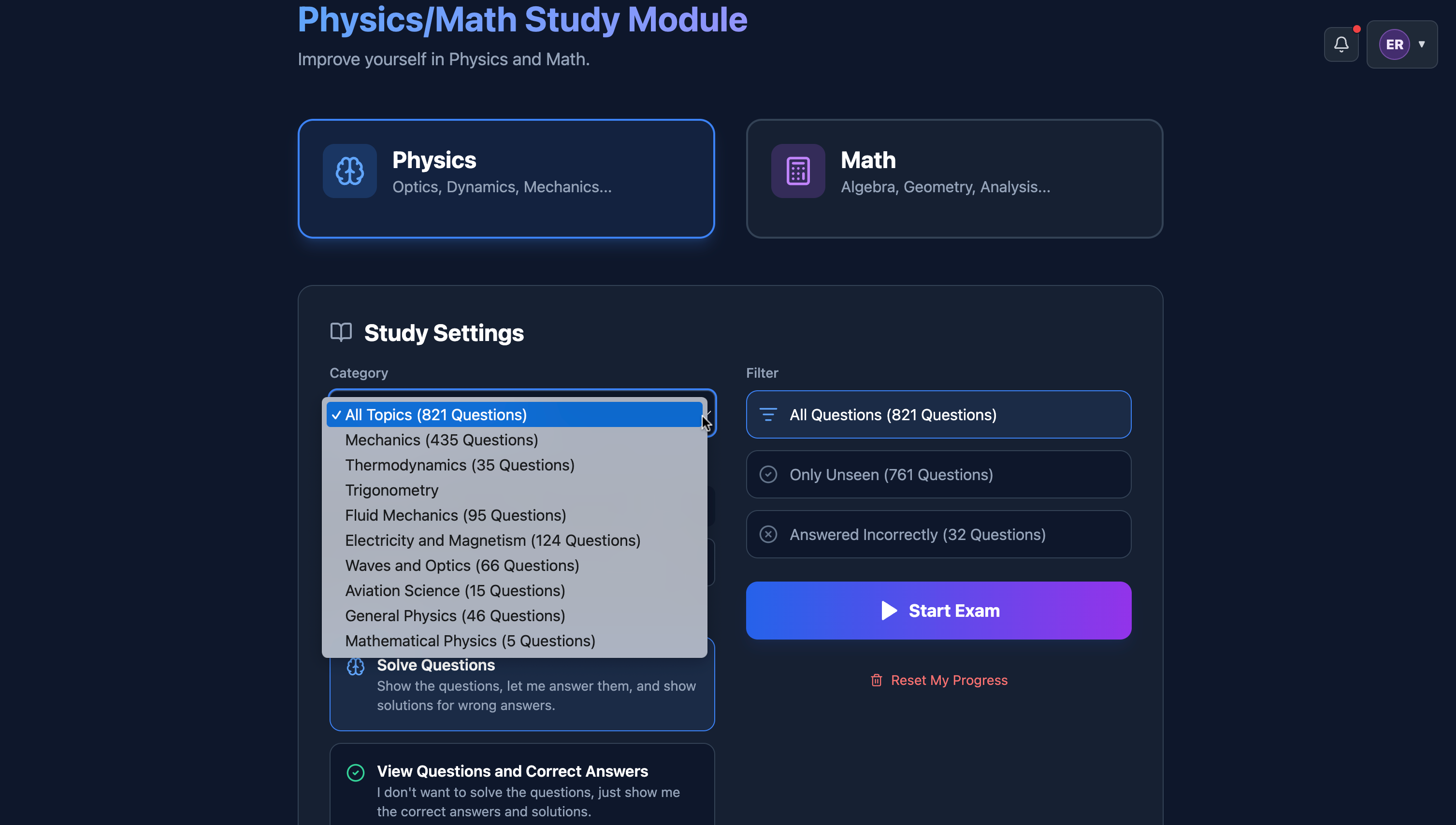
Filter by technical topic
The physics leg runs in the same study module: hundreds of English questions across mechanics, thermodynamics, fluids, electricity & magnetism, waves & optics and aviation science — with the "answered incorrectly" filter to revisit weak areas.
Practise setup reading with diagram questions
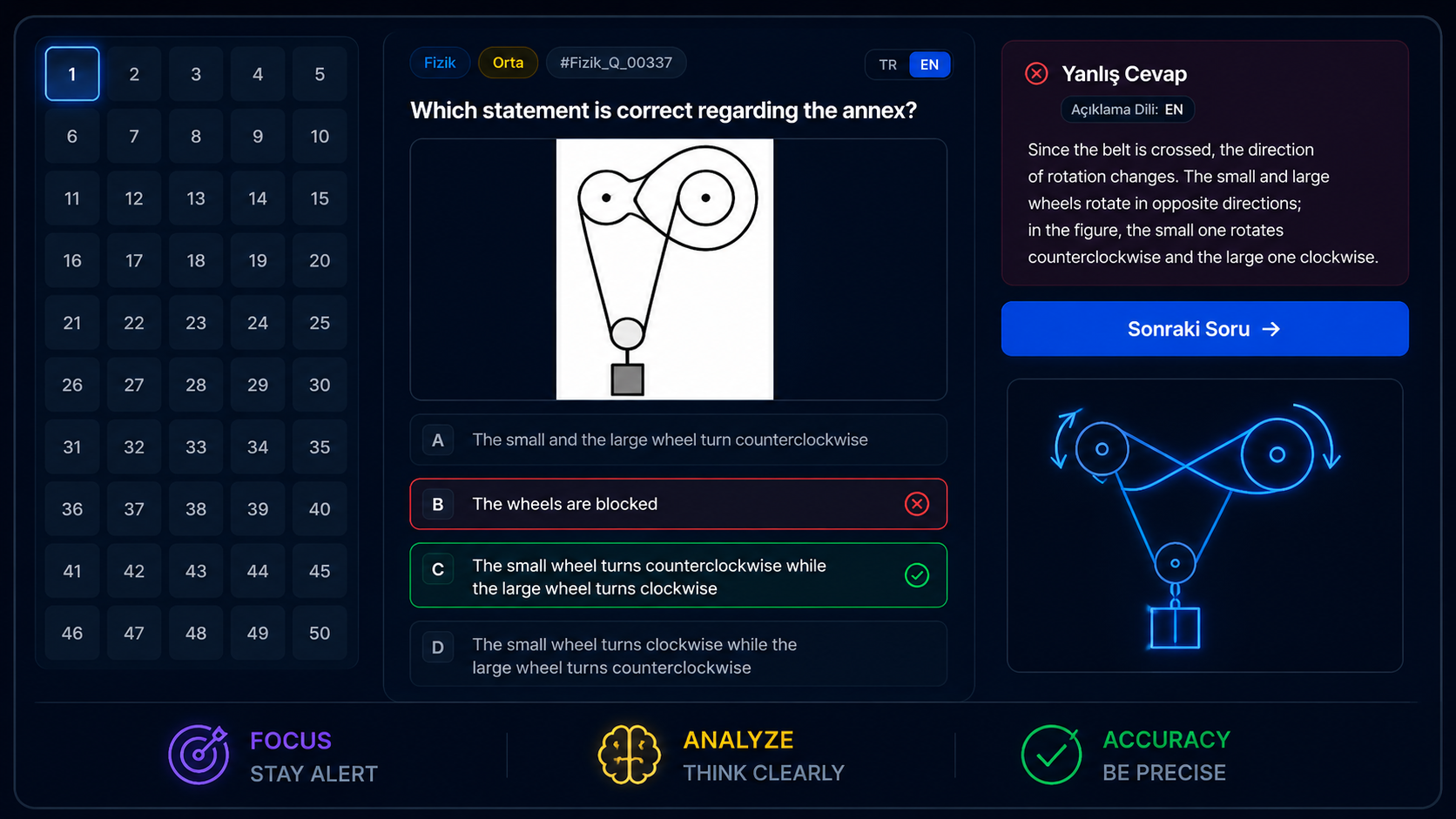
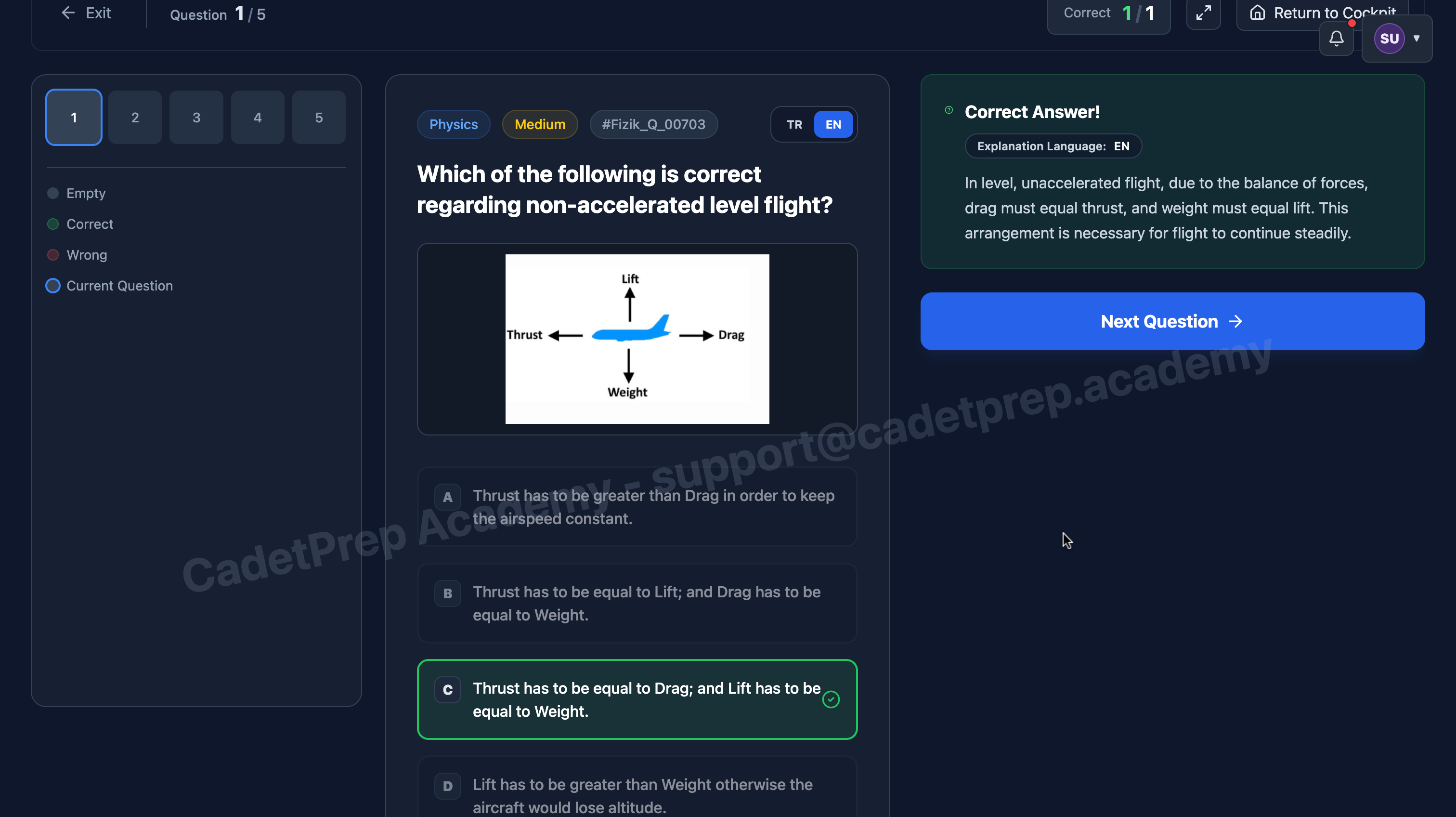
A large share of the questions carry diagrams: force arrows, mechanisms, flight forces. The step-by-step English explanation after each answer trains the read-the-setup-before-the-formula reflex.
Measure in exam mode
Exam mode hides feedback and runs the clock; the result appears at the end. The point is checking whether your conceptual clarity survives time pressure.
How difficulty scales
Question difficulty scales with diagram complexity more than theory: multi-force setups and combined machines demand more careful reading, not more formulas.
Most wrong answers are misread setups, not calculation errors. Strong candidates spend the first seconds purely on the diagram — directions, forces, pivots — and only then look at the options.