What this test measures
Working memory is your brain's ability to hold and manipulate information in real time. The gridChallenge measures how accurately you can track changing patterns on a grid while continuing to update your mental model.
For pilots, working memory is critical — you must simultaneously hold ATC instructions, monitor instruments and execute procedures without losing any thread.
How the simulation works
- 1
Memorise dots — one at a time
A field of grey dots appears. One dot darkens for about 3 seconds, then goes back to normal. This happens three times in a round — you must remember WHICH dots lit up and in WHAT ORDER (1 → 2 → 3).
- 2
Answer an interleaved yes/no question after every dot
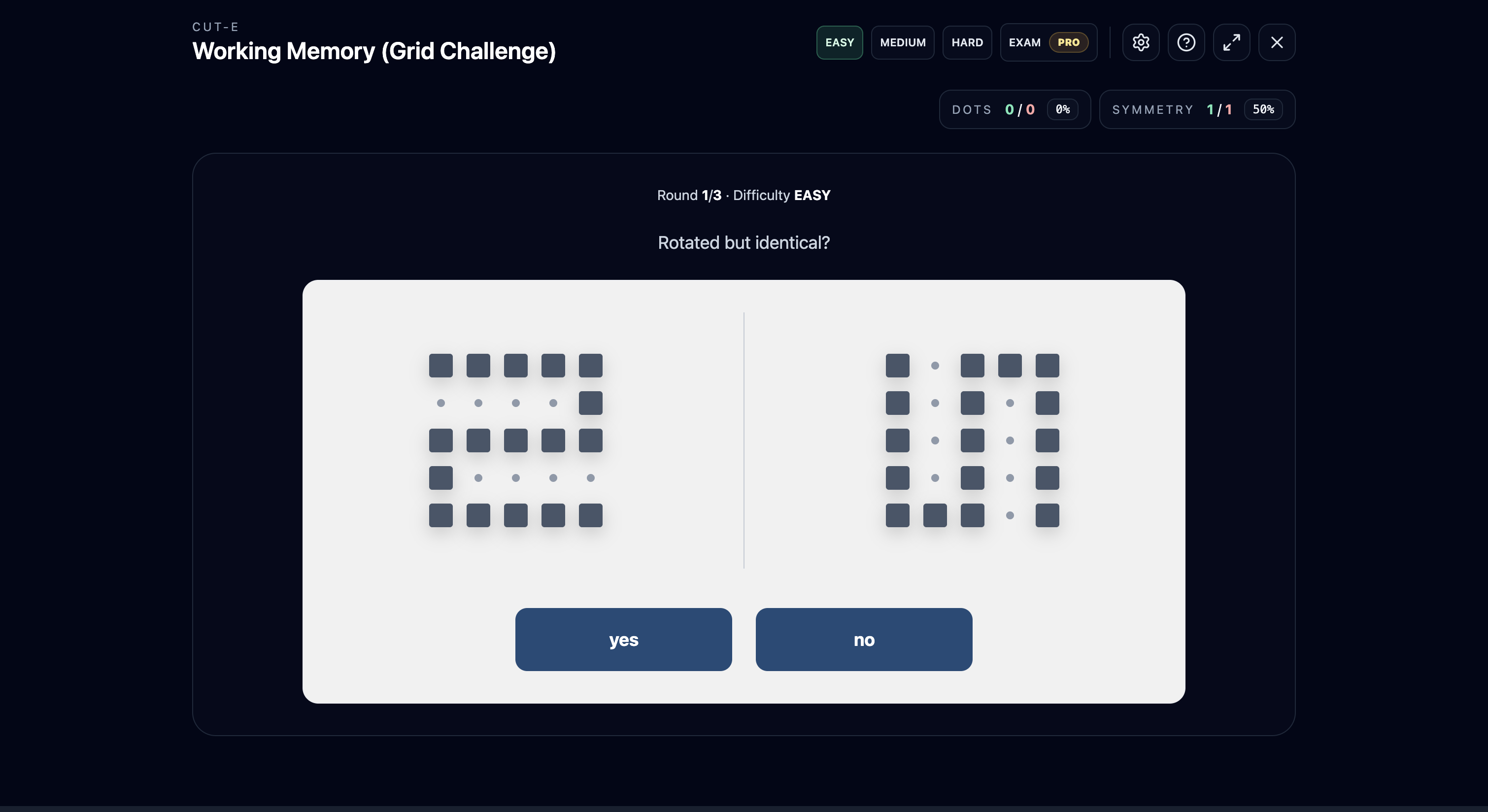
Between the dots, the grid disappears and a quick visual judgement appears: "Is it symmetrical?", "Rotated but identical?" — two patterns to compare with a YES/NO answer. These questions are there to overwrite your short-term memory; answering them accurately while protecting the dot sequence is the real skill being measured.
- 3
Harder rounds swap in figure-addition puzzles
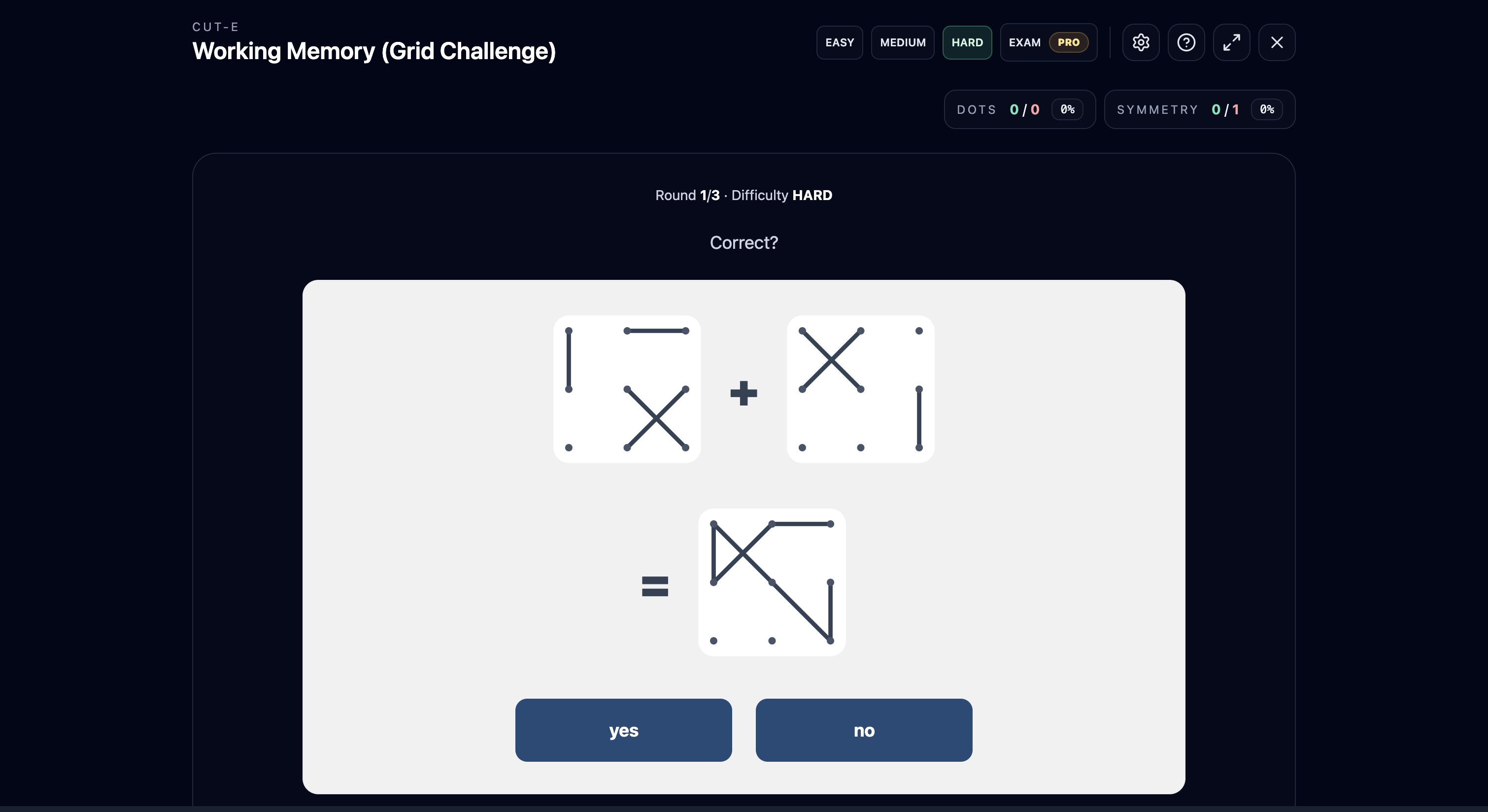
On higher difficulty the interleaved question can become a matchstick-figure equation: figure A plus/minus figure B — does the result equal figure C? Judge YES or NO. The interleaved questions get harder while the dot task stays the same.
- 4
Recall the dots in order and submit
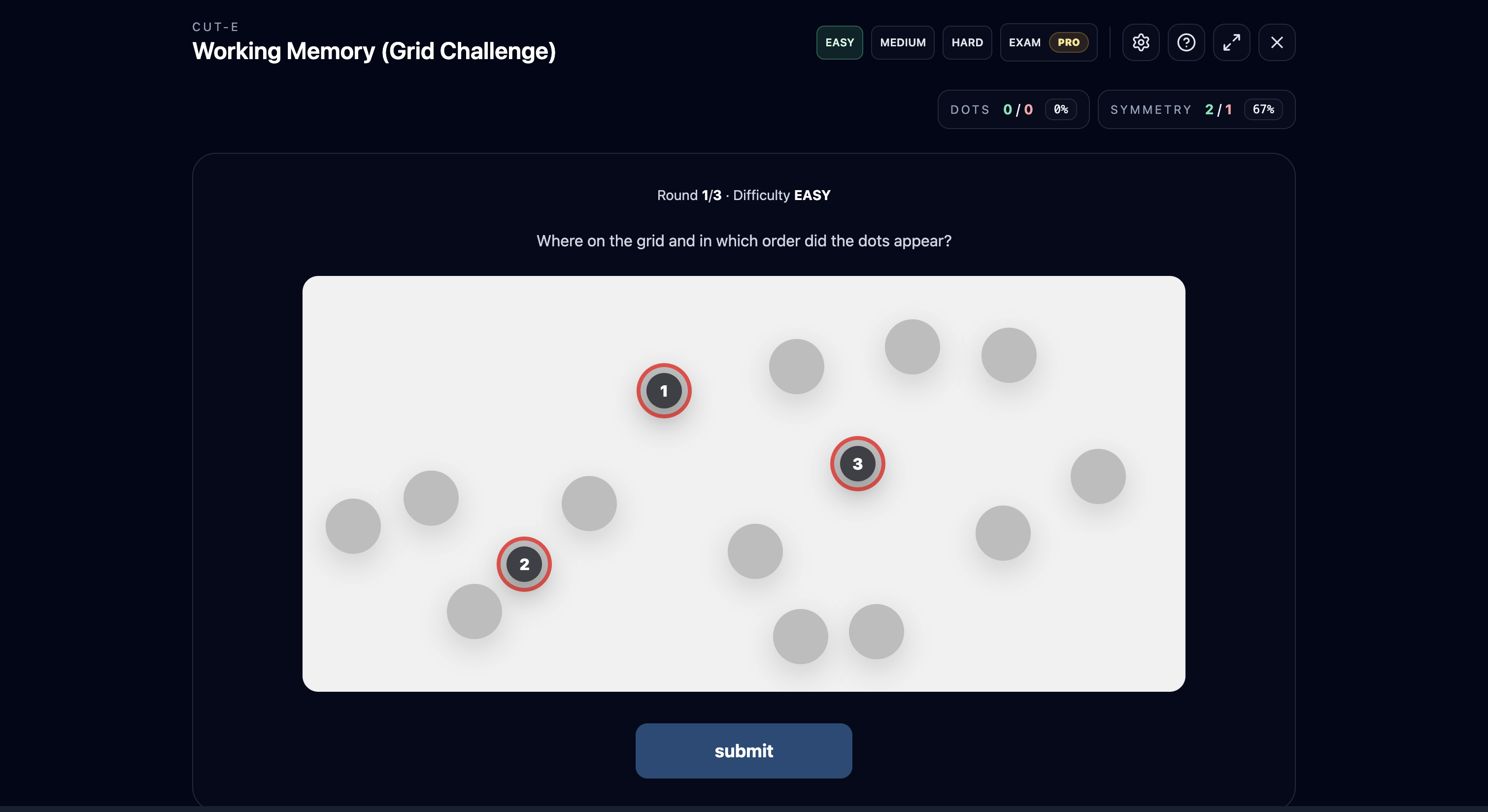
After the third question the full dot field returns with the prompt "Where on the grid and in which order did the dots appear?". Tap the three dots in their original order — each gets a numbered ring — then press submit. Tapping a selected dot removes it if you need to correct yourself.
- 5
Scoring
Each round contributes two scores: memory (all three dots in the exact order) and question accuracy (0–3 correct). The session score is the average of the two — so ignoring the yes/no questions to protect the dots is a losing strategy.
What it looks like
Tips for this test
- Anchor each dot verbally the moment it lights up ("top-left… centre… bottom-right") and rehearse the little phrase during the questions.
- Answer the interleaved questions decisively — hesitating drains the same working memory you are trying to protect.
- For symmetry questions, scan corner cells first; mismatches hide there most often.
- For rotation questions remember: YES means rotation only — if the pattern was also mirrored, the answer is NO.
- The recall order matters. Getting all three positions right in the wrong order scores zero for memory.
- Train fatigue management: working memory collapses fastest when you are tired, so practise short and rested.
Difficulty breakdown
Difficulty rises on two axes at once: the interleaved questions use bigger, denser grids (6×6 up to 8×8), and the question mix shifts toward the harder rotation and figure-addition types. Mock Exam mode ramps Warm-up → Standard → Advanced across nine rounds in a single run.
Average candidates lose the dot order while thinking about the questions; top performers compress the dots into a short rehearsed label and answer the questions almost reflexively, protecting both halves of the score at once.