Complex Planning Capability — AON Cut-e motionChallenge
What this test measures
This section measures your ability to plan and execute sequences of actions to achieve a goal state while anticipating consequences.
It mirrors flight planning, fuel contingency thinking, and traffic flow management where the best outcome comes from deliberate sequencing rather than reactive moves.
How the simulation works
- 1
A sliding-block puzzle with one goal
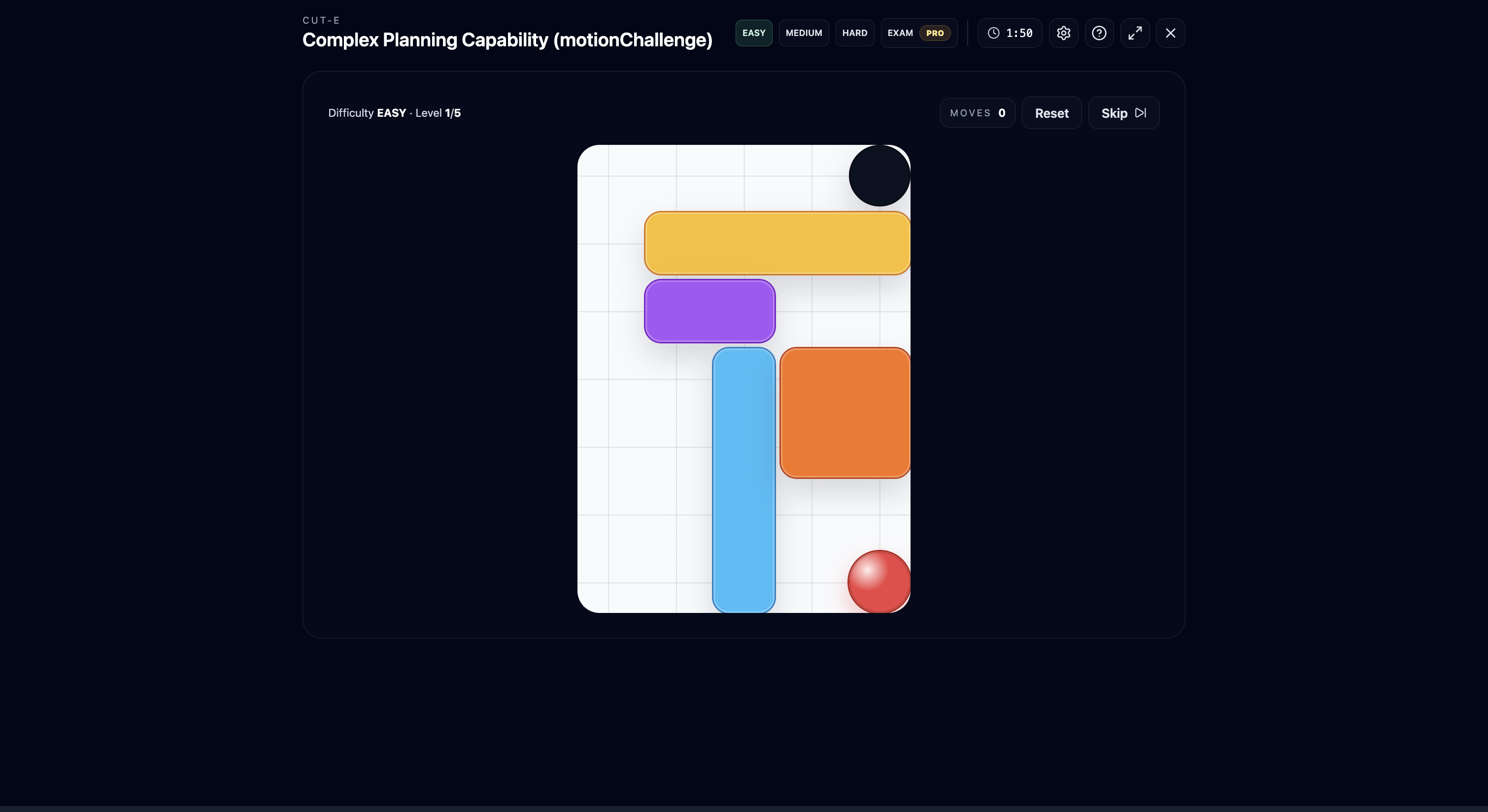
Each level is a grid holding coloured blocks, fixed grey walls, a red ball and a black target cell. Your job: slide blocks out of the way and bring the red ball onto the black target.
- 2
Drag pieces — one axis at a time
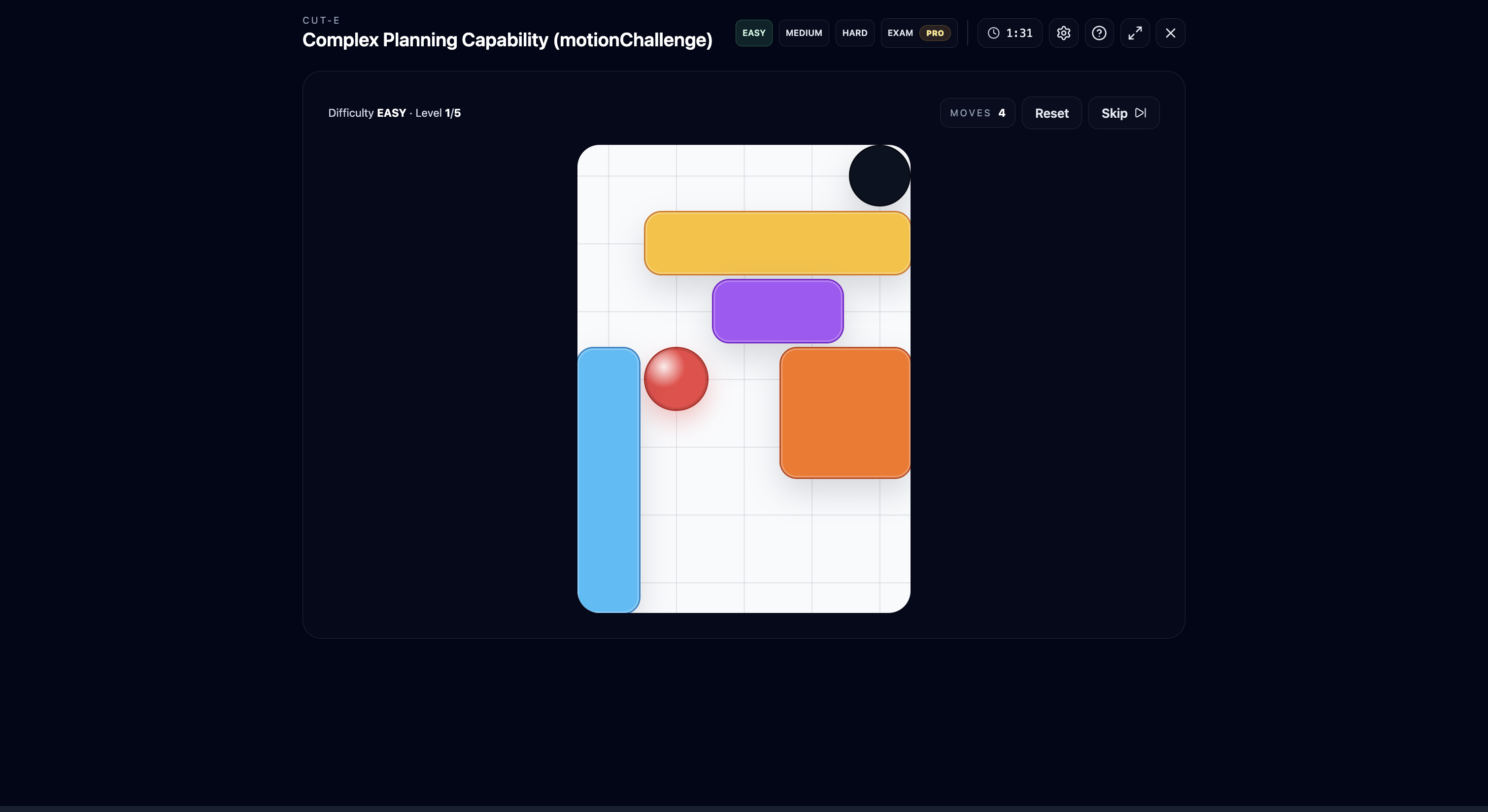
Grab a block or the ball and drag it horizontally or vertically; pieces slide until they hit another piece or the edge, and cannot overlap. Every drag that changes a position counts as one move — fewer moves is better.
- 3
Levels get tighter
A run steps through hand-built levels: early ones are open grids, later ones add fixed walls and bigger blockers. Reset restores the level start; Skip jumps ahead but the skipped level never scores.
- 4
Built-in help and scoring
If you get stuck (many moves, resets, or ~45 seconds on a level), the simulation offers a hint or a full shortest-solution replay — watching the full solution completes the level without scoring it. The score is the share of levels you solved yourself.
What it looks like
Tips for this test
- Plan the ball's route to the target FIRST, then move only the blocks that sit on that route — random shuffling burns moves and time.
- Move the biggest blocker first; small blocks usually have more parking options.
- Think in corridors: you are not "moving blocks", you are opening one continuous channel for the ball.
- A fast Reset beats a slow rescue — if the layout is tangled, restarting with a plan is cheaper than untangling.
- Use hints sparingly and full solutions only to learn a pattern; solved-with-solution levels do not count toward your score.
Difficulty breakdown
Early levels are open grids solvable in a handful of moves; later levels add fixed walls and long blockers that demand a full plan before the first drag. The move counter quietly punishes shuffling.
Average candidates move pieces to see what happens; strong candidates trace the ball's corridor backwards from the target first, then execute a short deliberate sequence — and reset quickly when a plan dies.