Reaction Time — AON Cut-e scales rt
What this test measures
This test measures the speed and accuracy of simple and choice reactions to visual and/or auditory stimuli.
In aviation, reaction performance affects how quickly you respond to warnings, traffic alerts, and time-critical events like engine failures.
How the simulation works
- 1
Watch two shapes change continuously
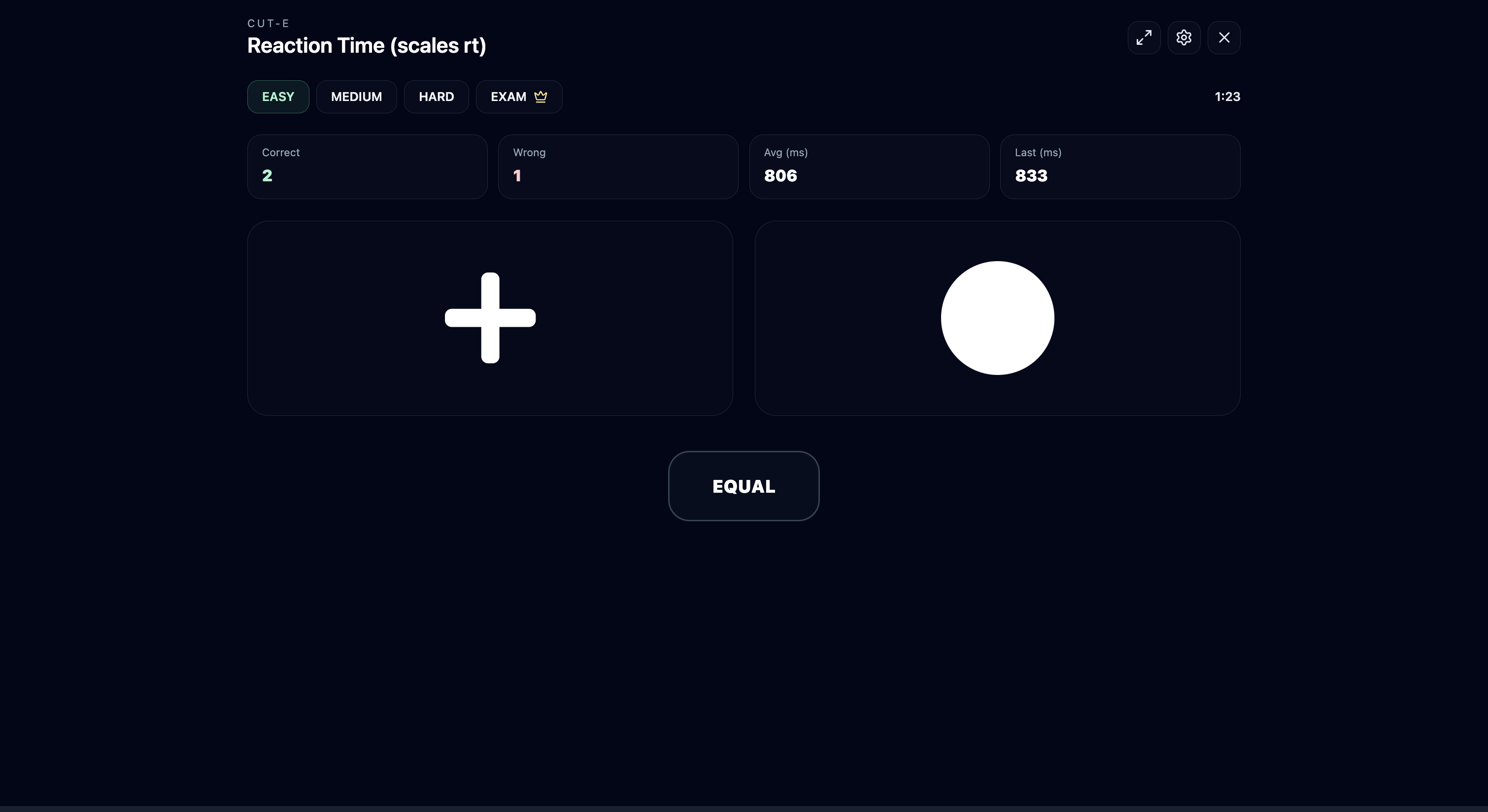
Two panels each show one shape (square, triangle, circle, star or plus). The left and right shapes change on their own rhythm, a fraction of a second apart — the stream never stops for you.
- 2
Press EQUAL only when both shapes match
Whenever a change makes the two shapes identical, a short reaction window opens. Press the EQUAL button inside that window to score. Pressing when the shapes differ counts as wrong; letting a match pass without pressing counts as missed.
- 3
Speed rises with difficulty
On Warm-up the shapes change roughly every second and the reaction window is generous (~1.5 s). On Advanced the changes come faster and the window shrinks to about 1.1 s. Mock Exam mode ramps Warm-up → Standard → Advanced automatically during the run.
- 4
Scoring
Score = correct ÷ (correct + wrong + missed) × 100. Both false presses and missed matches pull the score down, and your average reaction time is tracked so you can see whether you are genuinely getting faster.
What it looks like
Tips for this test
- Fix your gaze between the two panels and compare with peripheral vision instead of looking left-right-left.
- Treat EQUAL as a precision trigger: pressing on "almost equal" pairs is the fastest way to ruin your accuracy.
- Do not chase a miss — one late window is gone; stay calm for the next match.
- Short daily sessions beat marathon runs: raw reaction speed trains best in a rested state.
- On CadetPrep, raise the speed slider gradually — training slightly above your comfort pace is what moves the average reaction time.
Difficulty breakdown
Warm-up gives slow shape changes and a generous window; Advanced accelerates the stream and cuts the reaction window to about a second. Mock Exam ramps through all three levels within one continuous run.
The separator is false-press discipline: average candidates keep their speed but start leaking wrong presses as the pace rises, while top scorers hold near-zero false alarms with stable sub-second reactions.