Deductive Reasoning — AON Cut-e switchChallenge
What this test measures
This section measures rule-based deductive reasoning with a switching component — applying changing rules to stimuli and switching between rule sets rapidly.
It tests cognitive flexibility alongside deductive accuracy, a skill pilots use when switching contexts (manual to automated, normal to abnormal procedures).
How the simulation works
- 1
Shapes go in, shapes come out — through coded machines
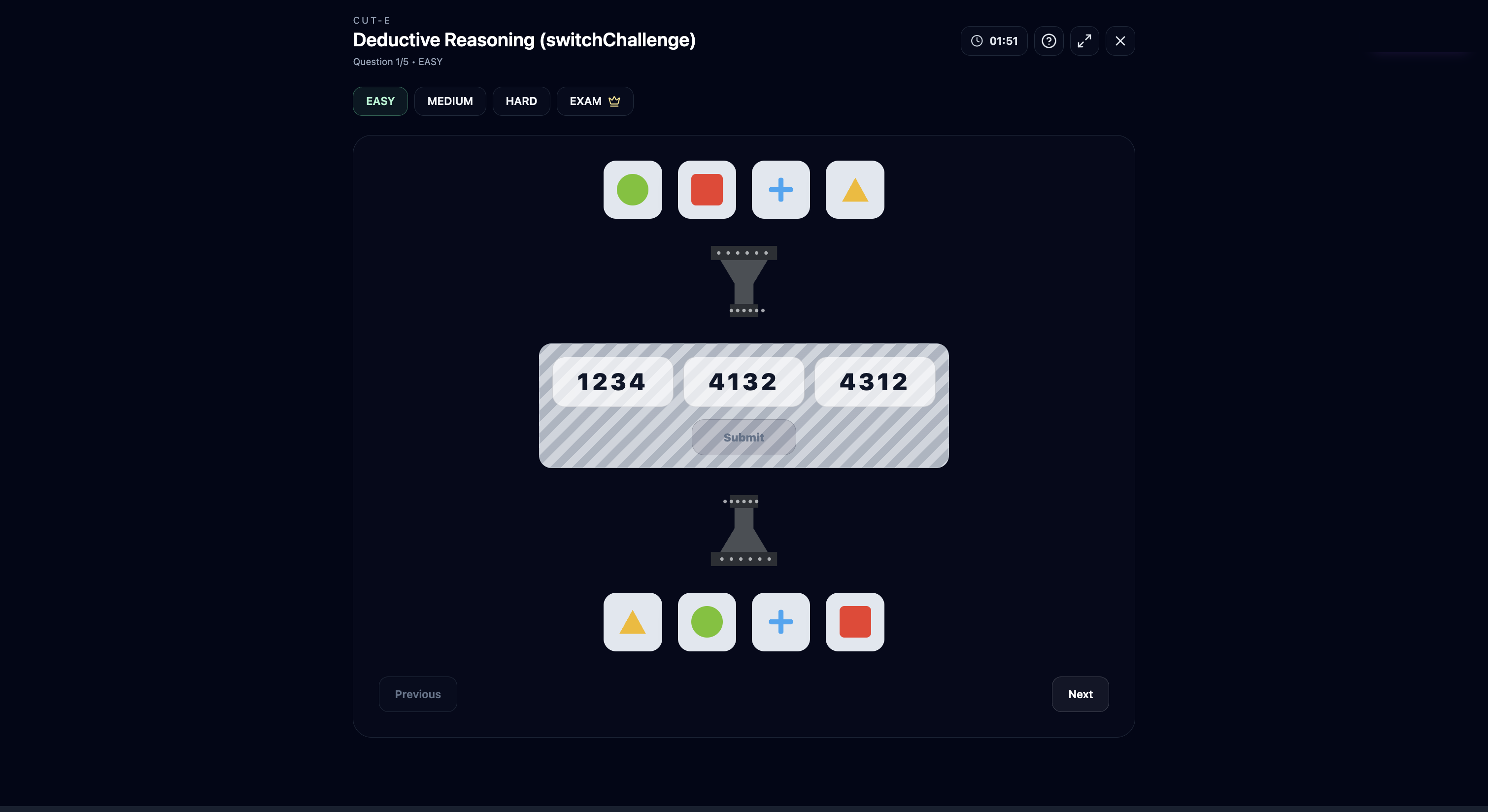
Four shapes enter a funnel machine at the top and leave at the bottom in a different order. Each machine applies a 4-digit code that is a permutation of 1-2-3-4: the code "2413" means "output = 2nd, 4th, 1st, 3rd shape of the input".
- 2
Pick the missing code from three options
Compare the top row with the bottom row and choose which of the three candidate codes produces that transformation. Select an option, then press Submit — the correct code turns green, a wrong pick turns red, and the question locks.
- 3
Harder levels chain the codes
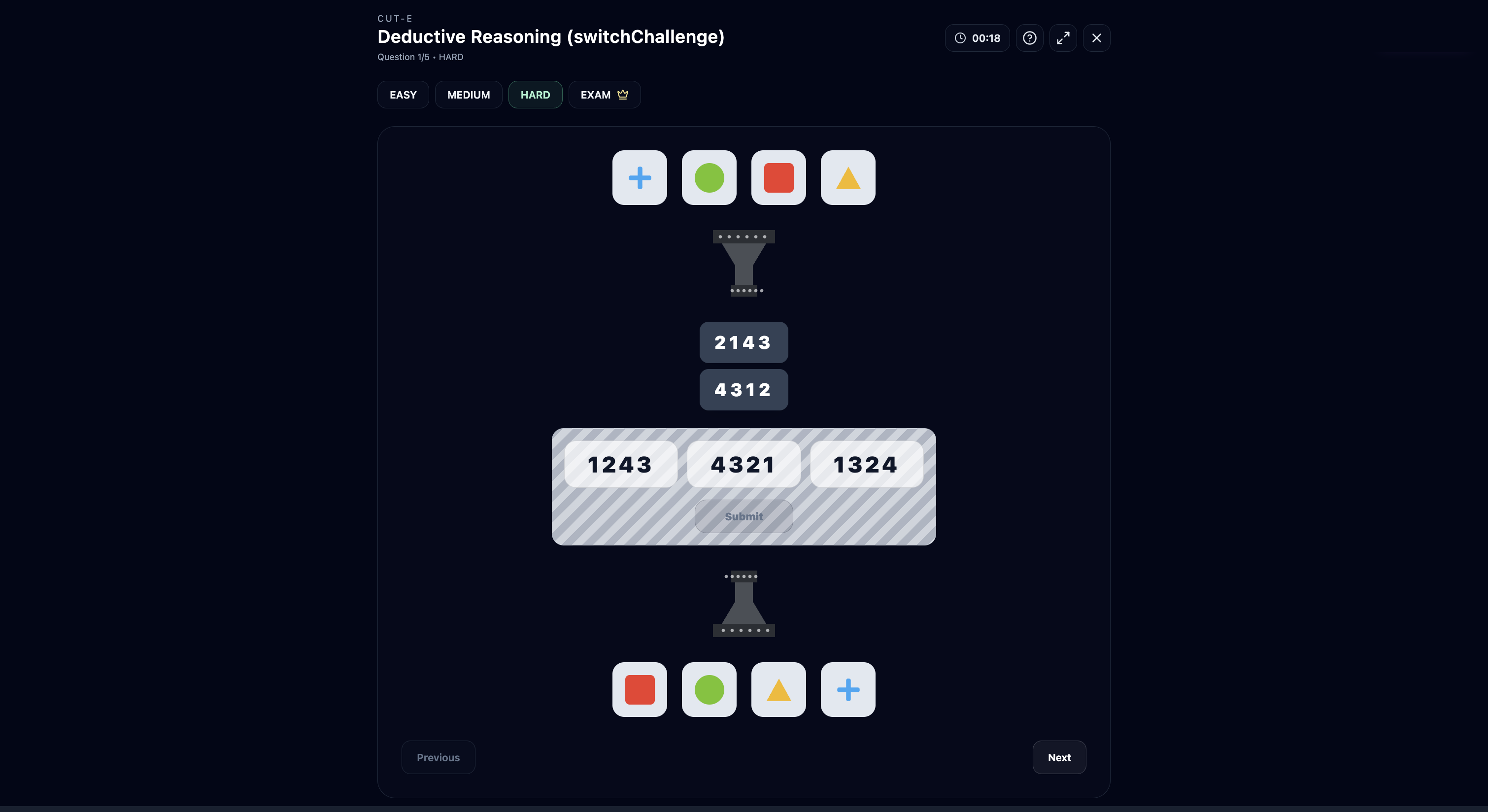
On Standard one code is already shown — it was applied first, and you supply the missing second step. On Advanced two codes are shown and you must find the third, final code of the chain. Work through the shown codes step by step before testing the options.
- 4
Scoring
The score is accuracy over the questions you submitted; skipped questions are tracked as blanks and do not dilute the percentage. Mock Exam runs a 12-question set that ramps Warm-up → Standard → Advanced.
What it looks like
Tips for this test
- Read a code as "which top position is copied into each output slot" — it is NOT "where each top shape goes". Most errors come from reading it backwards.
- Build the answer from the output row: for each bottom position ask "which top position is this shape from?" and write the digits down mentally in order.
- In chains, apply the shown code(s) first and work with the intermediate row — never jump from top to bottom directly.
- A valid code uses 1, 2, 3, 4 exactly once; eliminate any option instantly if two digits repeat in your derivation.
- Verify your chosen option on just two positions — if both match, the permutation logic guarantees the rest.
Difficulty breakdown
Chain length drives difficulty: direct mapping on Warm-up, one already-applied code on Standard, two on Advanced — every extra code multiplies the mental bookkeeping.
Top scorers derive the code from the output row instead of testing the three options one by one, and always verify two positions before submitting; that habit keeps even Advanced questions under half a minute.