Deductive-logical Thinking — AON Cut-e gapChallenge
What this test measures
This section measures deductive reasoning: applying a given rule to reach a logically necessary conclusion.
For pilots, it maps to procedure execution, checklist adherence, and fault isolation using known system logic.
How the simulation works
- 1
A grid where every row and column needs every symbol
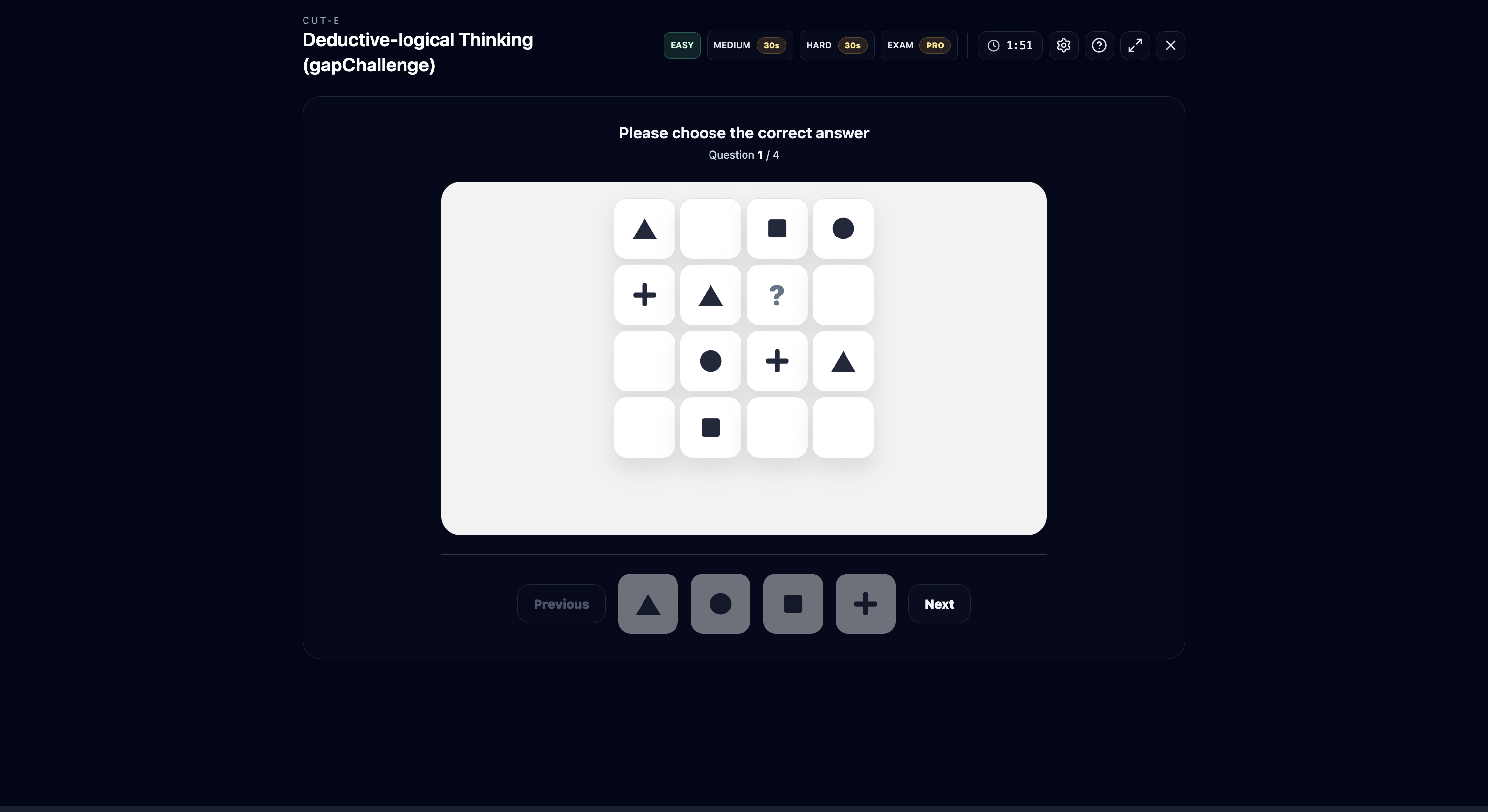
The puzzle is a Latin square of shapes: on a 4×4 grid, each row and each column must contain the triangle, circle, square and plus exactly once (5×5 grids add the diamond). Some cells are given; one empty cell is marked with a "?".
- 2
Deduce the "?" cell by elimination
Look at the row and the column that cross at the "?" — the symbols already present eliminate candidates until only one remains. You may fill other empty cells as scratch work to narrow things down; only the "?" cell is graded.
- 3
Place the symbol — first answer locks
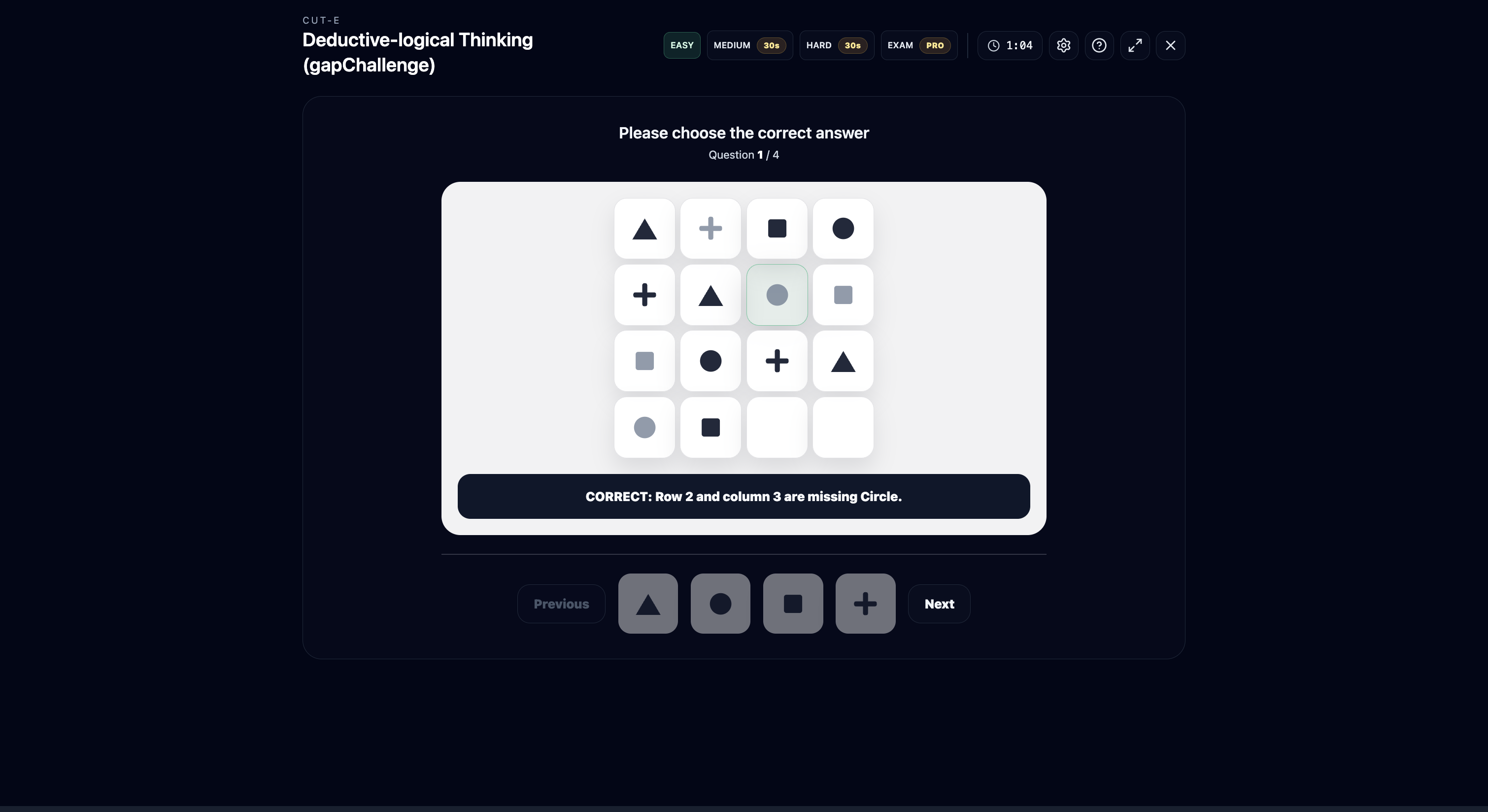
Tap the "?" cell, then tap a symbol in the palette. The target grades immediately: green when correct (with an explanation like "Row 2 and column 3 are missing Circle"), red when wrong — and it cannot be changed, so deduce before you touch it.
- 4
Twelve puzzles, rising grids
A full run holds 12 puzzles: Warm-up ones on 4×4, Advanced ones on 5×5 with more blanks. Every puzzle is generated with a unique solution, so pure logic — never guessing — always reaches the answer.
What it looks like
Tips for this test
- Start from the "?" row and column only; most targets fall to a two-line elimination without touching the rest of the grid.
- Count what is missing, not what is present: "this row lacks circle and plus" is a faster mental object.
- Fill scratch cells only when the direct elimination leaves two candidates — then one extra deduction elsewhere usually decides it.
- On 5×5 grids remember the fifth symbol (diamond); carrying the 4×4 habit is a common slip.
- The target locks on first placement: never tap the "?" cell until you are certain.
Difficulty breakdown
Warm-up puzzles sit on 4×4 grids where the target usually falls to a single row-column elimination; Advanced moves to 5×5 with more blanks, demanding chained deductions through scratch cells.
Because the target cell locks on first placement, impulse costs more here than anywhere else: top performers finish the deduction fully before touching the grid and almost never miss a target.